Paving the way to a Low-Carbon and Sustainable Transition in Morocco, RCREEE organized the final workshop to develop the National Cooling Action Plan (NCAP) in Morocco

RABAT, MOROCCO — October 26, 2026
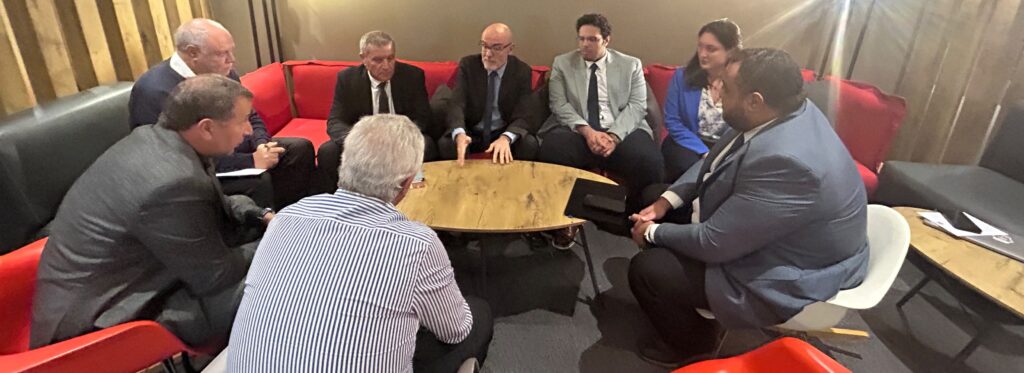
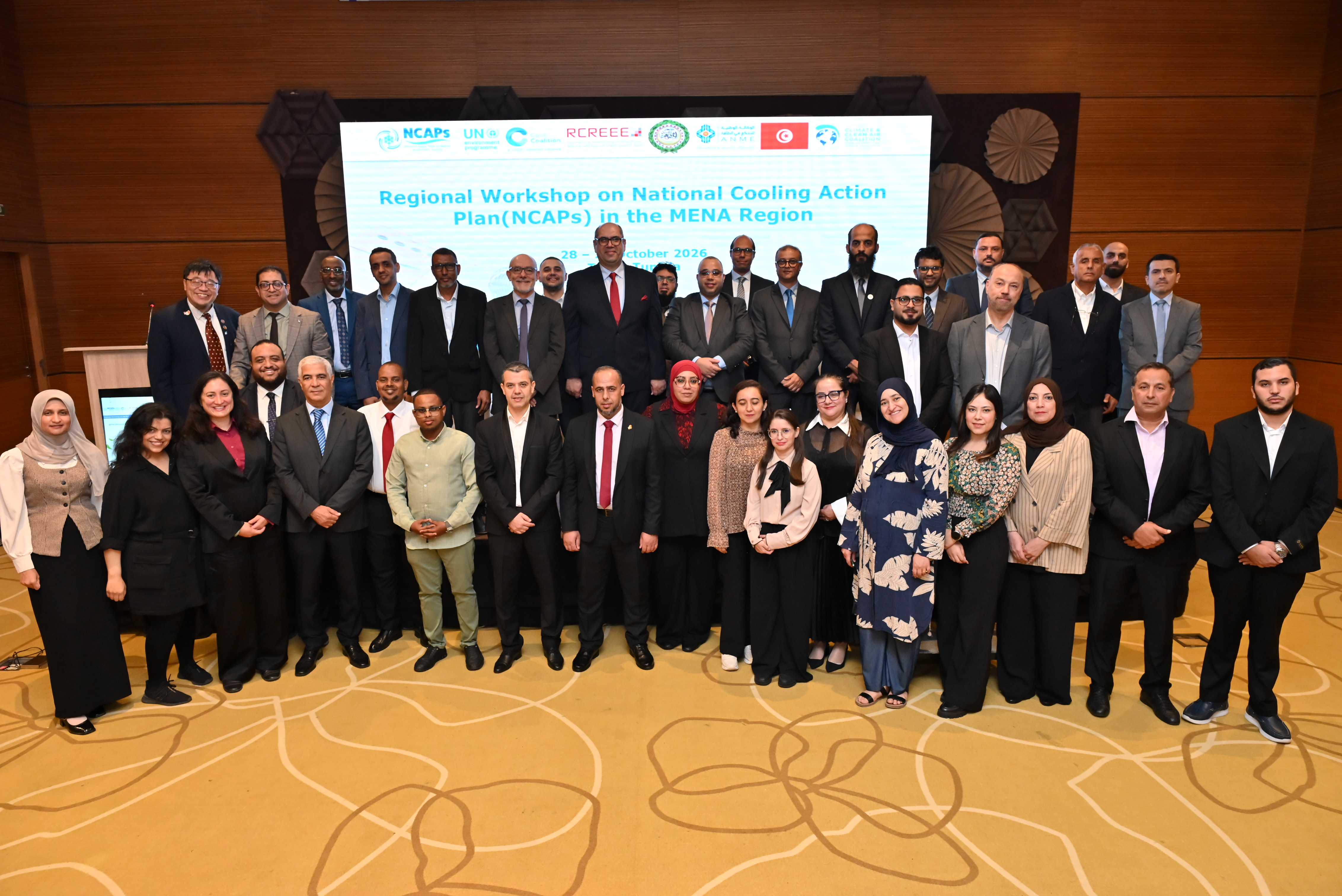
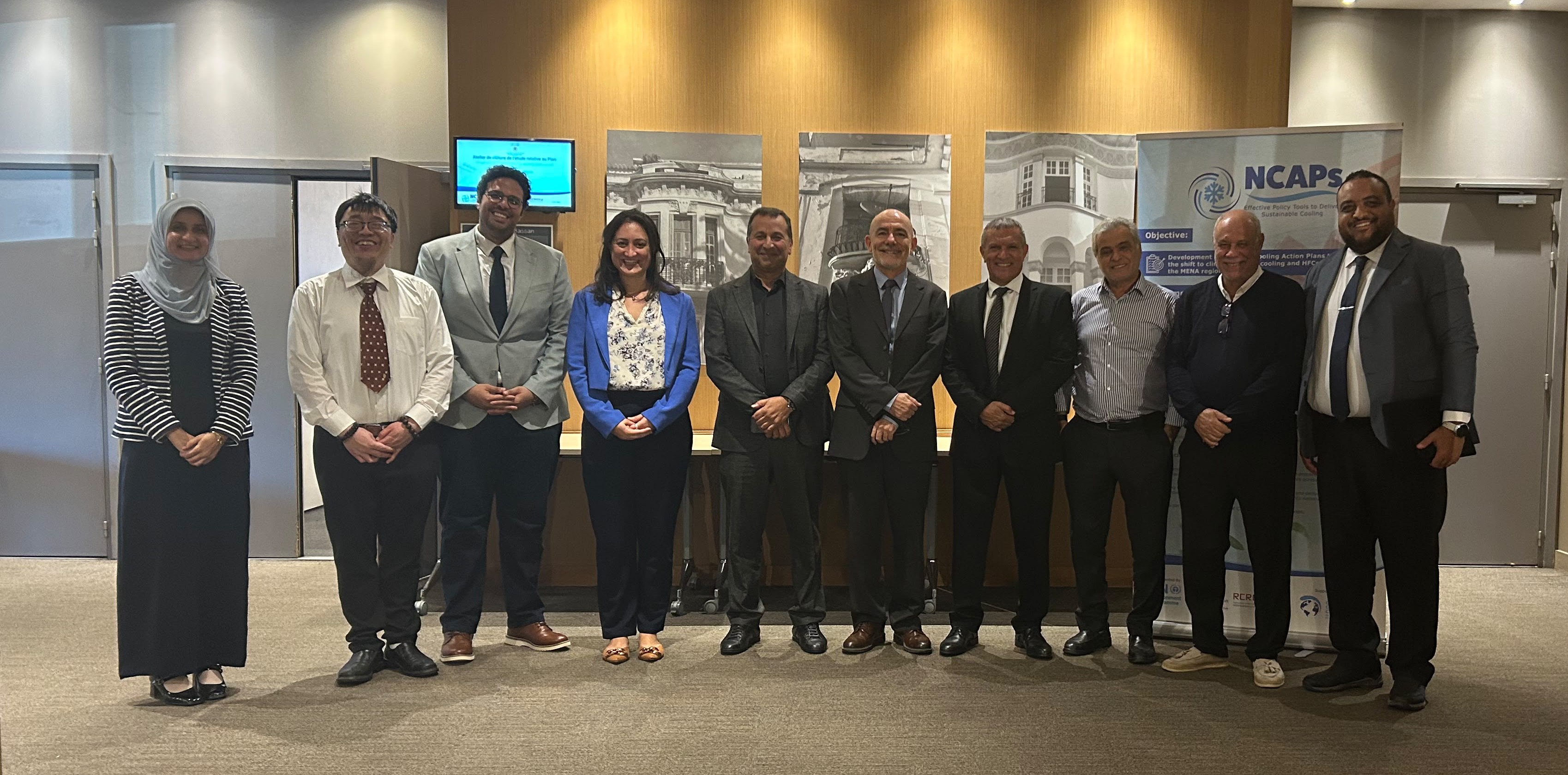
Under the high patronage of the Ministry of Energy, Mines and Sustainable Development, in collaboration with the Regional Centre for Renewable Energy and Energy Efficiency (RCREEE) & UNEP (Cool Coalition), the final workshop of its National Cooling Action Plan (NCAP) held on 26th October 2026, in Rabat. Gathering over 40 attendees across different ministries, international financial institutions, and sector experts, the event marks Morocco’s transition from data assessment to national execution, establishing a benchmark for sustainable cooling in the MENA region.
1. High-Level Interventions & International Alignment
Opening addresses by Ms. Hafsa Lakhlifi (Director of Circular Economy and Pollution Control, MTEDD), Mr. Roberto Borjabad (UNEP), and Ms. Hind Abdaoui (Department of Energy Transition / RCREEE) highlighted Morocco’s commitment to balancing socioeconomic growth under sustainable climate action. The NCAP directly supports Morocco’s updated NDC 3.0, the Kigali Amendment, and the Global Cooling Pledge.
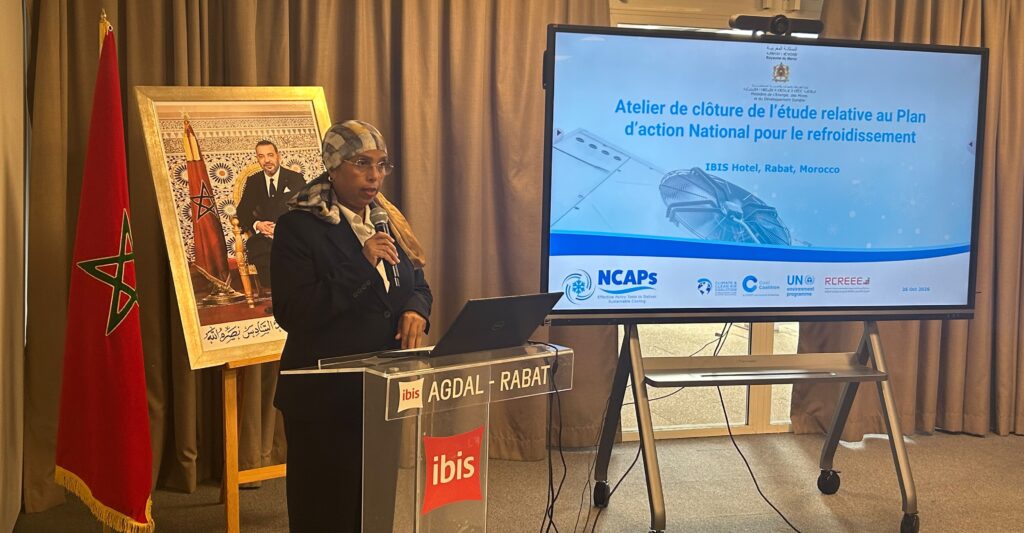
Dr. Lorena de Carvalho Araujo (UNEP) stressed that global cooling capacity will triple by 2050 (from 22 TW to 68 TW). In Morocco, where extreme heat drove a 28% surge in peak electricity demand between 2019 and 2026, structured cooling planning is critical to prevent grid overload, protect public health, and eliminate high-GWP refrigerants.
2. Data Baseline & Sectoral Emissions
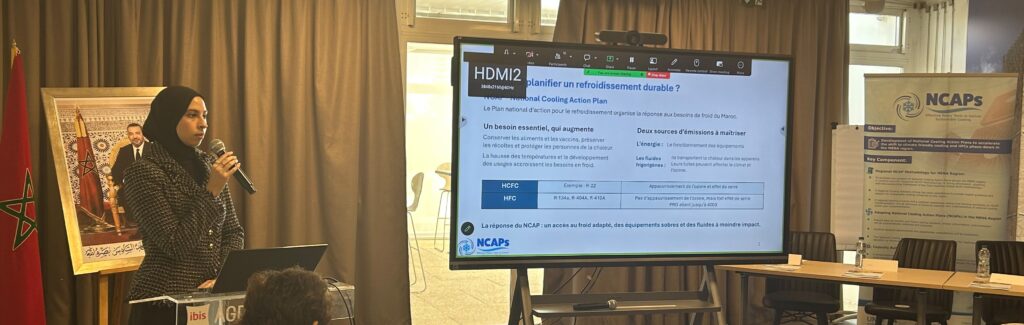
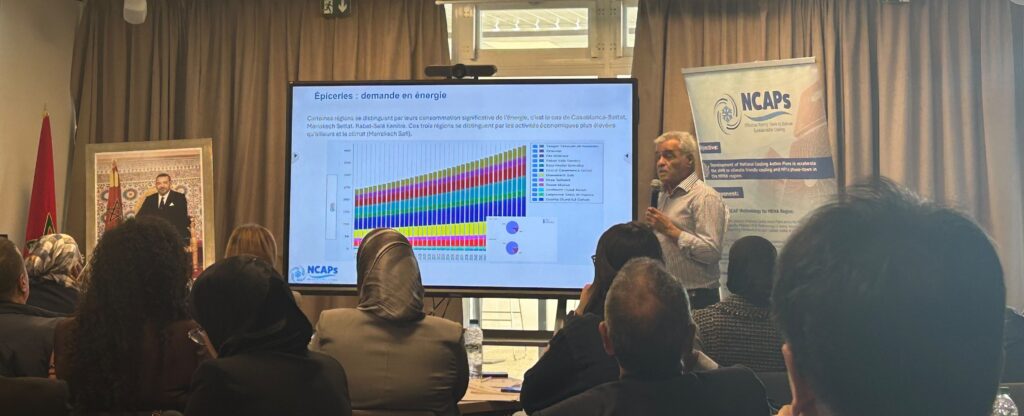
Eng. Salma Boumhaouad (IRESEN) presented data collected across nine economic sectors and revealed that Morocco’s cooling stock comprised 10.06 million installed units in 2021, consuming 2,148 tonnes of refrigerants, 62.7% of which were high-GWP HFCs (R-404A and HFC-134a). Sector mapping further highlighted severe cold chain gaps causing annual post-harvest food losses of around 136,000 tonnes of apples in Drâa-Tafilalet and 145,000 tonnes of potatoes in Rabat-Salé-Kénitra.

3. Modelling & Mitigation Scenarios
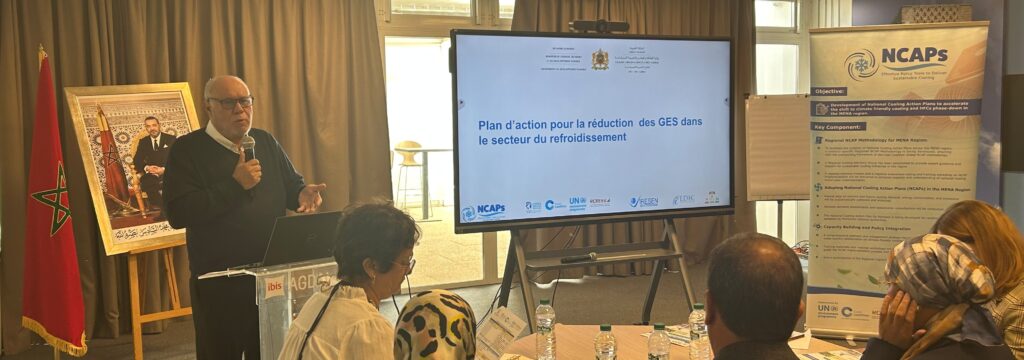
Technical modelling presented by Dr. Zakaria and Dr. Touzani (EDIC-NRJ30) using the Low Emissions Analysis Platform (LEAP) demonstrated that implementing the NCAP achieves an 18.3% cumulative GHG reduction by 2035 and a 32% reduction by 2050 compared to Business-As-Usual (BAU). Key mitigation measures include enforcing mandatory MEPS under Law 47-09, promoting natural refrigerants, and integrating solar-powered cold chains.
4. UNFCCC BTR2 Reporting & Bankable Business Models
UNEP Senior Advisor Dr. Zhuolun Chen detailed the methodology to map NCAP climate metrics directly into Morocco’s Second Biennial Transparency Report (BTR2) due by December 31, 2026. He also presented business models, including Cooling-as-a-Service (CaaS) and ESCO contracts, that eliminate upfront CAPEX for end-users, cutting cooling energy costs by around 23% and operational emissions by up to 49%.
5. Sustainable Financing & Implementation Roadmap
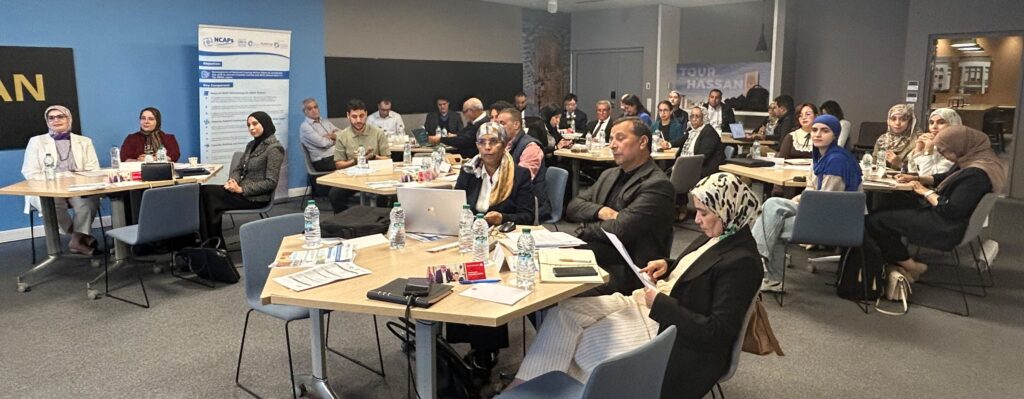
Mr. Amr Seleem (UNEP) moderated a panel that included Mr Radouane Hanan (MTEDD) and Mr Jalel Chabchoub (African Development Bank – AfDB). Mr Chabchoub confirmed AfDB’s readiness to deploy dedicated Refrigeration and Air Conditioning (RAC) credit lines once a country priority pipeline is established. They suggested launching an Equipment Replacement Program, creating a national refrigerant scrapping and recycling framework, and expanding TVET vocational certification for technicians handling flammable/toxic natural refrigerants.